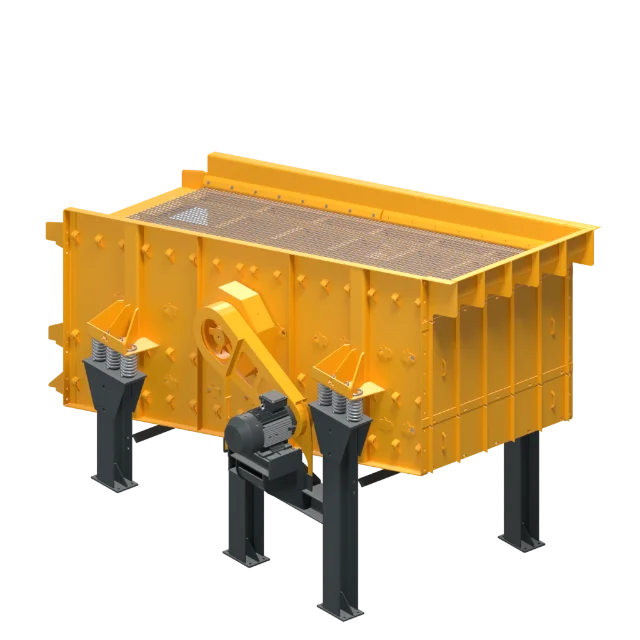
Two quotes arrive for "a four-deck inclined vibrating screen". The first line is almost identical; the total is not. The difference is often not in the vibrating screen but in what surrounds it: the structure that holds it at height, the collectors that separate the products, the chutes that take them to the conveyors, the spray system that washes the material. If one quote includes them and the other does not, the comparison is not between two screens: it is between a screen and a section of a plant.
This article takes a real machine, the LA-VVP-5154-OR08 heavy-duty inclined vibrating screen, and builds it one group at a time. The weights quoted are those published on its product page; at the end there is a checklist to compare two quotes item by item.
The same vibrating screen, five different supplies
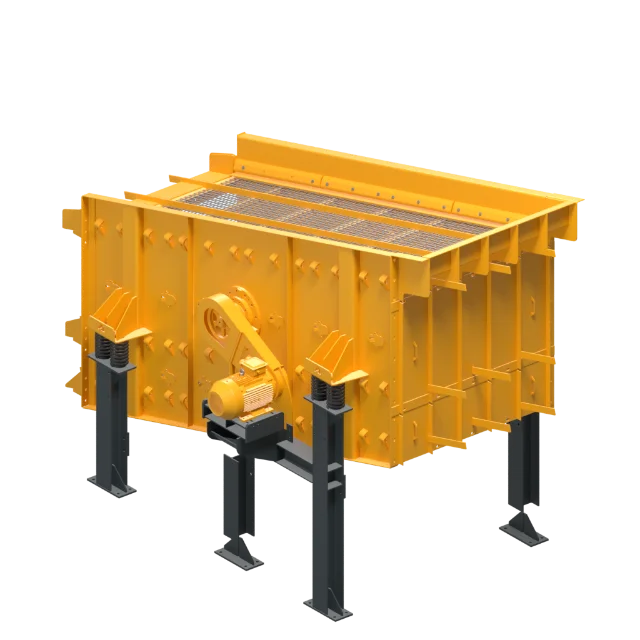
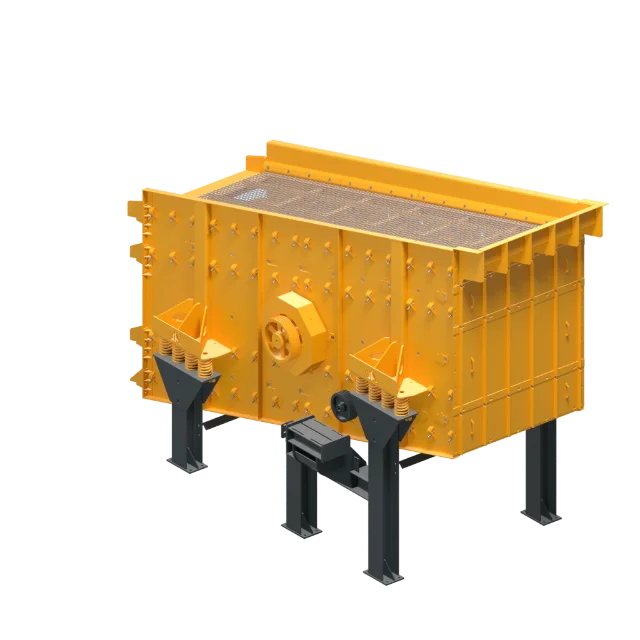
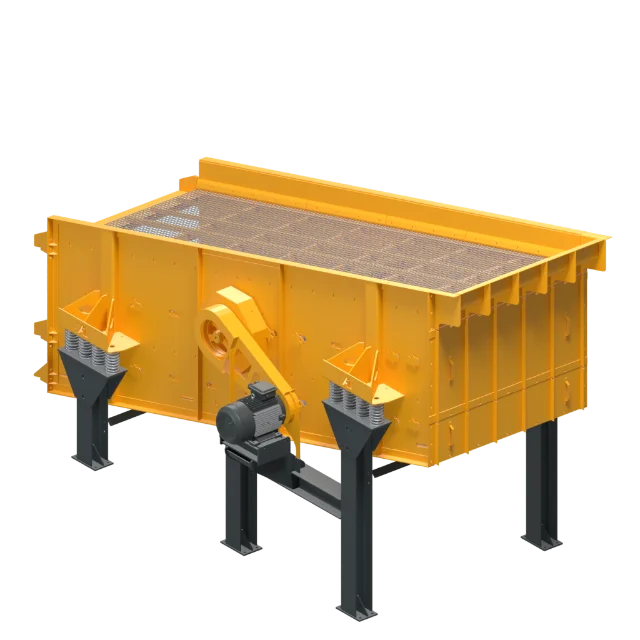
The images share the same framing: each step adds an item that a quote may or may not include.


The chute kit that takes sand and water to the recovery unit is a further option (650 kg) and does not appear in the images. The other data of every item are in the screen's data sheet, which can be requested from the product page.
First compare the supplies, item by item. Then the prices.
What each item does, and what happens if it is missing
The support structure
The screen vibrates on sixteen steel springs and must sit on a rigid structure, at the right height for the collectors below and the conveyors in front. The LA-IV-515 is designed for this screen, with walkway level, platforms, stairs and guard rails for inspection and mesh changes. If the quote does not include it, the structure has to be designed, calculated and built separately, and it must carry the loads of a vibrating machine.
The front collector and the chutes
Each deck retains one size. The front collector gathers the four oversize fractions and separates them into four siphon outlets; the product chutes take each one to its own conveyor. Without these two items the products leave the screen but do not reach the stockpiles separated: chutes and hoppers have to be made on site.
The lower collector
What passes through the last mesh, the sand, falls with the wash water. The lower collector gathers it under the whole screen and sends it to the recovery unit: it is the item that links screening to sand recovery.
The spray system
The spray bars wash the material on the decks as it moves forward. A quote that includes the spray system should state how many nozzles it has, the water connection, and the water flow and pressure to be supplied: these are the figures needed to size the pump and the water line.
An item missing from a quote does not disappear from the plant: someone else has to buy, design or build it, with the time and the interface responsibilities that follow. The correct comparison is made on equal scopes of supply.
The differences the first line does not show
With the same equipment, two vibrating screens can still be very different. A few figures help to tell, and they should be requested in writing.
- The weight of each item. For the same deck area, the weight of the vibrating body says a lot about plates, stiffeners and frames. Every manufacturer knows it and should state it item by item.
- The vibrating system. In the Abronzino heavy-duty series the motion comes from a rotary mechanical vibrator unit with an eccentric-mass shaft and adjustable centrifugal force.
- Power and supports. The LA-VVP-5154-OR08 has 22 kW installed and rests on 16 steel springs: figures to set against those of the other quote.
- Capacity and its assumptions. The capacity of a screen depends on the mesh apertures, the grading of the feed and the washing. Two equal figures obtained with different assumptions cannot be compared.
- The meshes. Which apertures, which material (steel, rubber, polyurethane), and whether they are included.
- Documents and services. Operation and maintenance manual, CE declaration of conformity, transport, installation, commissioning, spare parts and service: who provides them and on what terms.
Each item, on the 3D model of the screen
The model alongside is the digital twin of the LA-VVP-5154-OR08 on the LA-IV-515 support structure, taken from the construction design. On scrolling, the view moves to the items described; the model can also be rotated and zoomed by hand.
01The complete supply
Screen, support structure, collectors, chutes and spray system: everything needed for the five products to leave separated and for the material to be washed.
02The vibrating body
Four decks inclined at 15°. The vibrator unit on the side drives the whole body, which rests on the springs.
03The support structure
It holds the screen at height and carries platforms, stairs and guard rails for safe work around the machine.
04The product outlets
The front collector separates the four oversize fractions; the siphon chutes take each one to its own conveyor.
05The spray system
The spray bars run above the decks; the manifold distributes the water to all the bars.
06In operation
The material enters from the feed box, moves along the decks and splits: the gravels leave at the front, the sand falls with the water. The animation is illustrative.
A checklist to compare two quotes
The checklist gathers the items in this article. For each quote, tick the items included: the highlighted rows are those where the two quotes differ, the items to clarify with the suppliers before comparing prices. The checklist can be printed; the entries stay only in this browser.
Comparing two quotes for a vibrating screen
| Item | A | B |
|---|---|---|
| The machine | ||
| Screen with vibrator unit, motor and driveWith the stated weight of the screen alone. | ||
| Base frame and springs with counterplates | ||
| Meshes fitted on every deckWith apertures and material stated. | ||
| Drive guards | ||
| Structure and access | ||
| Support structureWith the height of the screen support level. | ||
| Stairs, platforms and guard rails | ||
| Product outlets | ||
| Front collectorWith one outlet per oversize fraction. | ||
| Chutes to the conveyors | ||
| Lower collector | ||
| Connection to the sand recovery unit | ||
| Washing | ||
| Spray systemWith the number of nozzles and the water connection. | ||
| Required water flow and pressure | ||
| Stated figures | ||
| Weight of each item of the supply | ||
| Capacity with the mesh apertures and the reference material | ||
| Installed power and type of vibration | ||
| Documents and services | ||
| Operation and maintenance manual and CE declaration | ||
| Transport | ||
| Installation and commissioning on site | ||
| Spare parts and direct service from the manufacturer | ||
The rows where the quotes differ.
The right comparison
A lower quote is not necessarily better value, and a higher one is not necessarily more expensive: it depends on what it contains. First, put the two supplies on equal terms, item by item and with the stated weights; then compare prices. With the checklist filled in, the differences become precise questions to put to the suppliers.
The same applies to the whole heavy-duty series: in the catalogue the models can be compared side by side, and for each one the product page shows the main figures, the 3D view and the data sheet request.
Compare the models
Heavy-duty inclined vibrating screens
Abronzino machines are designed and built in-house: for every item of the supply, the engineering office states what it includes, what it weighs and how it connects to the rest of the plant. How the screen works, inside and out, is explained in How an inclined vibrating screen works.
Frequently asked questions
What should a quote for a vibrating screen include?
Besides the screen with its vibrator unit, motor and meshes, a complete quote states whether it includes the support structure with stairs and platforms, the collectors that separate the products, the chutes to the conveyors, the spray system, documentation, transport, installation and commissioning.
Why can two quotes for the same screen differ so much in price?
Because they often do not describe the same supply. One quote may include only the screen, another also the support structure, collectors, chutes and spray system. On the LA-VVP-5154-OR08 the support structure weighs 7,850 kg, more than the screen itself at 6,300 kg.
What is a screen support structure?
The steel structure that holds the screen at working height, above the collectors and in front of the conveyors, with platforms, stairs and guard rails for inspection and mesh changes. It must be rigid, because it carries a vibrating machine.
Is the stated capacity enough to compare two screens?
No. A screen's capacity depends on the mesh apertures, the grading of the material and washing. Two equal capacities calculated on different assumptions cannot be compared: ask for the reference material and meshes.
Where are the full data of Abronzino screens?
In each model's data sheet, which can be requested from the product page in the catalogue. The catalogue pages show the main figures: capacity, power and weight.
Written by the Abronzino engineering office. The figures quoted are those published on this website; full data are in the data sheets, available on request from the product pages. The 3D animations are illustrative.